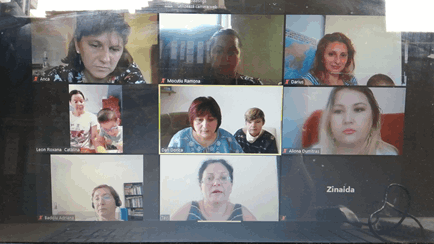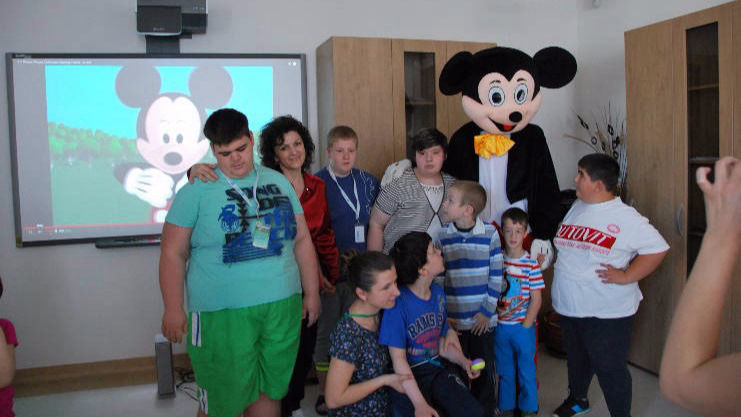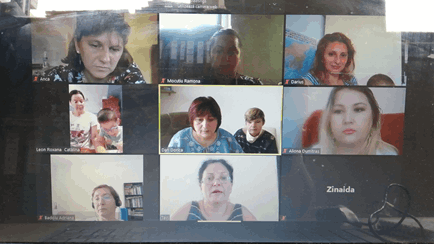
The Romanian Prader Willi Association organized during July 27-July 31, 2020 the first online therapeutic education group for patients with Prader Willi Syndrome. This week's activities included informational sessions, debate and training activities in the medical and social fields, disease management, psychological counseling, nutrition, physical therapy, speech therapy and dentistry. During these activities we enjoyed the presence of specialists from the country and abroad. For a week, doctors, therapists, psychologists and social workers shared their knowledge in order to help patients cope with the challenges of the disease, helping them achieve at home therapy.
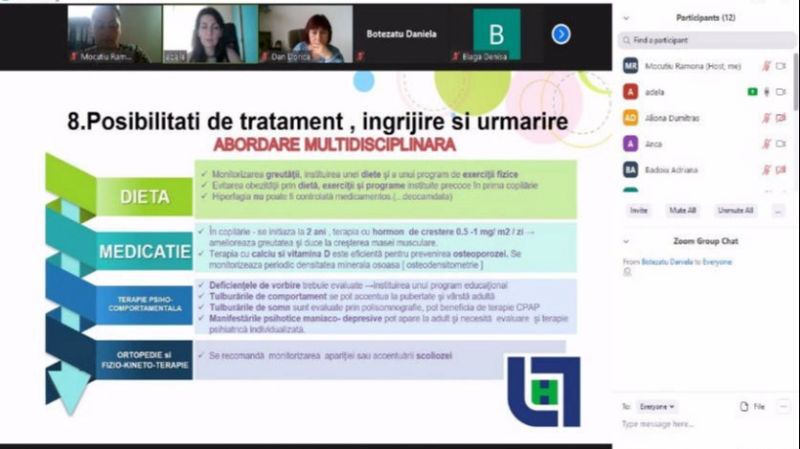
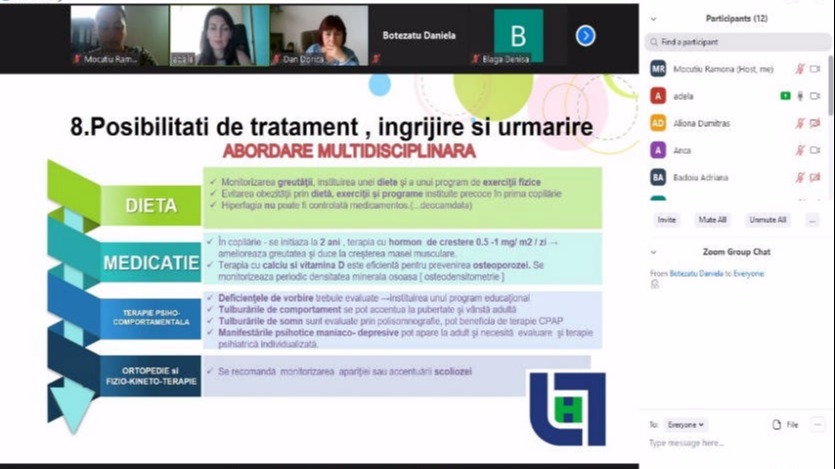
On the first day, there was a meeting with Dr. Adela Chirița - geneticist, who presented the general aspects of Prader Willi Syndrome. Participants asked questions about changes in the bone system in PWS and how they can be prevented. They also discussed the importance of growth hormone therapy and the importance of a multidisciplinary approach in the care and monitoring of patients with Prader Willi Syndrome.
During the discussion on social issues, Law no. 448/2006 was presented. It refers to the protection and promotion of the rights of people with disabilities and the organization of the social services system. It provides resources to protect people with disabilities. We talked about access to recovery therapy, social and medical services, about the benefits which people with disabilities have within the social services, but also about the obligations imposed by the law. During the discussion, the social benefits and the criteria for being classified as disabled were mentioned. The beneficiaries requested clarifications on the particular situations they faced / were facing and were guided on how to act further in order to obtain the rights they are eligible for according to the law.
Psychological counseling happened daily and focused on issues related to the identification, awareness and management of emotions. There was talk about ways to address the impediments that arise in everyday life and about identifying and raising awareness of psychological needs. At the same time, there was a discussion about anxiety and how to overcome moments of anxiety.
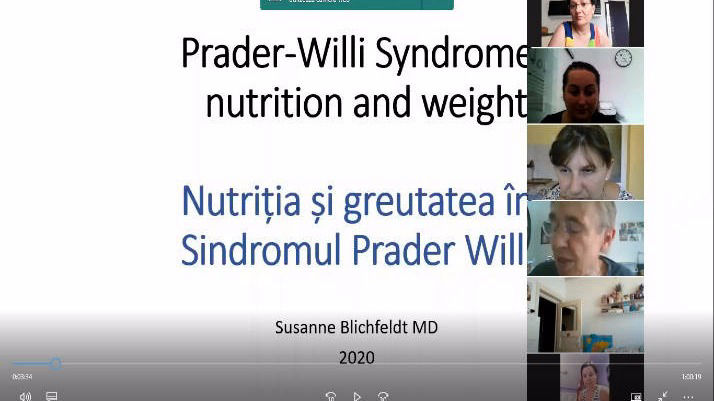
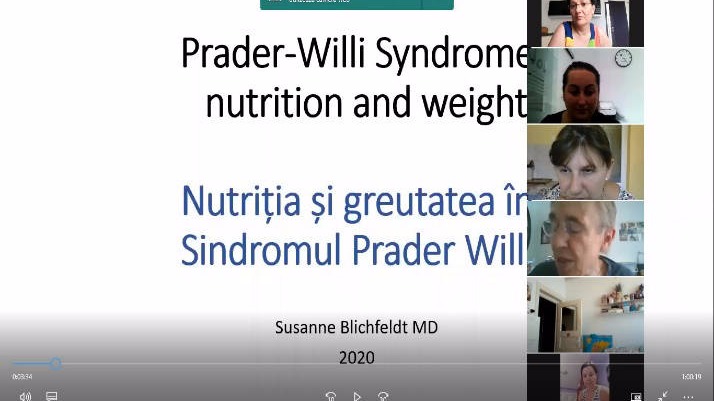
We had the opportunity to have Dr. Susanne Blichfeldt from Denmark with us again, who came up with new information on managing behavior problems in patients with Prader Willi Syndrome and answered questions about the challenges parents face in daily life.
Susanne gave us advice on integrating patients with Prader Willi Syndrome in kindergartens and schools. She also talked about helping children adapt in schools and how we can communicate with educators / teachers, but also with the children’s colleagues to facilitate their integration into the community.
She continued with information on nutrition and obesity in Prader Willi Syndrome, the main characteristics and symptoms by age, fat-free meals and calorie requirements of a meal, the reasons why low-calorie meals in Prader Willi Syndrome are needed. She explained where the desire to eat all the time comes from and how the diet could be managed in people with this diagnosis. The questions asked by the parents were related to swallowing problems, what to do when the child has reached an advanced stage of obesity and how to correct some inappropriate eating behaviors. They were also interested in the importance of physical therapy and exercise and how the family's eating behavior influences a child's weight gain.
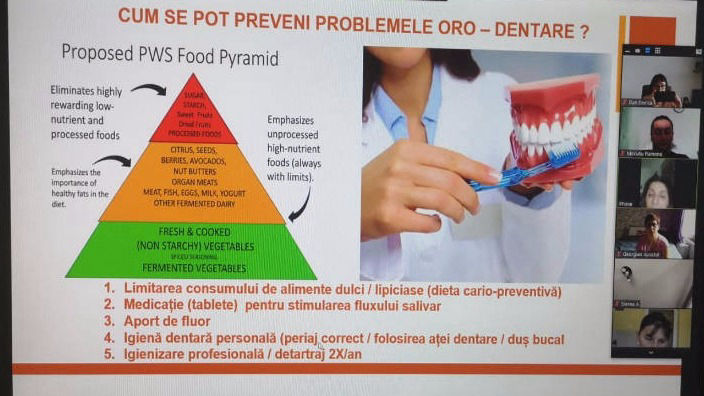
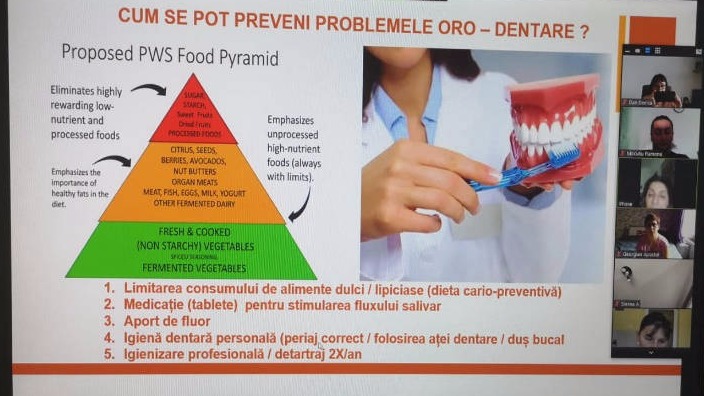
Mrs. Prof. Dr. Emilia Severin from the "Carol Davila" University of Medicine and Pharmacy in Bucharest discussed with the parents about dental problems in PWS.
During the meeting, important issues related to dentition were discussed, such as: dental features in Prader Willi Syndrome, treatment, care and interdisciplinary approach to dental problems, the impact of oral deficiencies on general health and how to prevent dental problems.
Thursday was just as interesting. Kinetotherapist Demjen Zelinke from the NoRo Center presented a series of exercises that patients can perform at home. In the practical part we had Dan Oana - a patient with Prader Willi Syndrome, perform exercises described by the kinetotherapist. Thus, the specialist managed to instruct the parents in order to be able to supervise the correct performance of the exercises by their children. At the same time, the importance of physical therapy in the development of children, in maintaining their weight or in losing weight, when needed, was discussed.
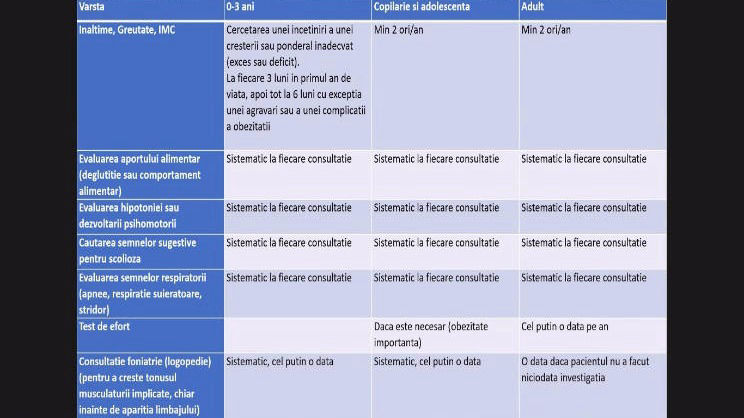
Diana Miclea - geneticist at the NoRo Center spoke about the monitoring of patients at certain ages, about the importance of the multidisciplinary approach of each patient and about their individual evaluation. The parents were also pleased with this meeting because they found out new things, the doctor coming with information taken from the French model.
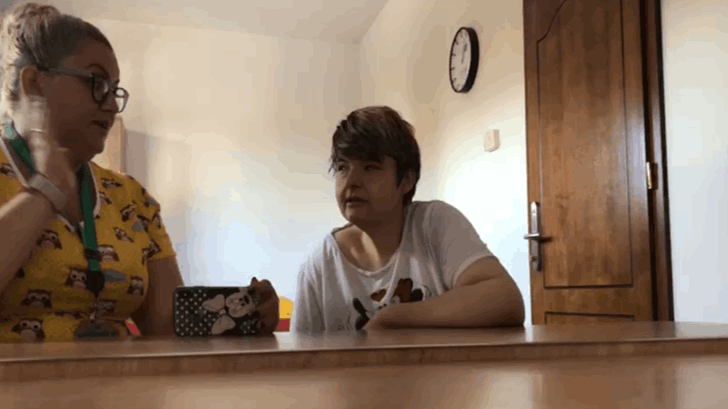
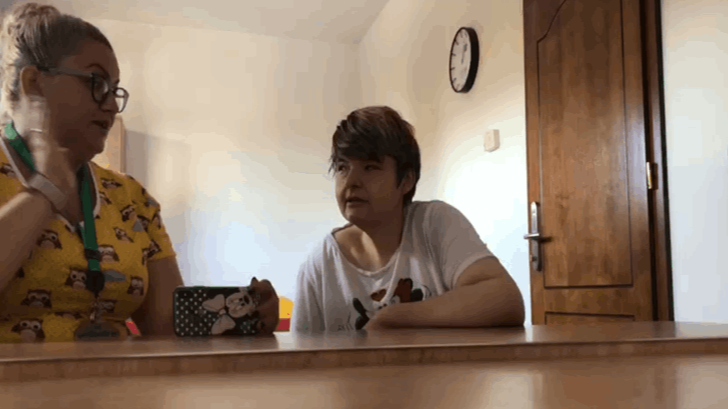
Friday was dedicated to speech therapy, final conclusions and evaluation of the group activities that took place during the week. Dan Alexandra, speech therapist at the NoRo Center spoke about the need for speech therapy in people with PWS, its importance and benefits in children's development, what speech therapy intervention entails and the importance of increasing the mobility of the phono-articular apparatus. She presented a series of practical speech therapy exercises, performed by Oana.
In the last part of Friday, the final discussion took place, in order to evaluate the activities carried out during the week. Given that Romanian parents who have children with SPW and live abroad also participated (Moldova, Canada, Bulgaria, Sweden, Romania) the possibility of exchanging information on the health systems of their countries was created. All participants in the group were delighted with the way this week went, saying they received new information about caring for their children and received answers to their questions.
Conclusions:
• Children with Prader Willi Syndrome are open and friendly, they like humor and activities they are familiar with.
• They do not want to cause problems, they want to have friends, be loved and to please everyone.
• Prader Willi Syndrome is a genetic disease without hereditary transmission
• Caloric requirements are low for SPW and acquired acquisitions are lower than in regular children
• Without support and rules, severe or morbid obesity can occur.
• Behavioral problems are related to food search and hyperphagia.
„I would like to thank you from my heart for the opportunity to participate in the PWS group program! It was wonderful! I found answers to some questions that stressed me for a while, I med nice and interesting mothers, I borrowed some ideas for a platform and a model to replicate. It was amazing! You are very, very brave!!!”
(Aliona Dumitras, Moldova)
Dacă doriți să primiți ultimele știri, completați adresa Dvs. de e-mail.